 Our Winter Newsletter should now be with you, but if you have not received it, you can read it online here Winter 2017 Newsletter.
If you would like us to post a copy to you, you can join our Newsletter Distribution List by contacting us here
Providing training, management skills, accounting and payroll services to the charity and voluntary sectors
Author: DCAS
Our Winter Newsletter should now be with you, but if you have not received it, you can read it online here Winter 2017 Newsletter.
If you would like us to post a copy to you, you can join our Newsletter Distribution List by contacting us here
 When to change charity structure
Changing to a different charitable structure usually involves setting up a new charity, transferring your original charity’s assets and liabilities to it then closing your original charity.
Your charity’s legal structure sets out what type your charity is. There are four common types of charity structure:
Your charity’s legal structure determines:
 You must tell Companies House about any changes to your limited company, including:
 The minimum contributions that you and your staff pay into your automatic enrolment workplace pension scheme are increasing.
Minimum contributions are increasing in two phases. The first increase must be in place from 6 April 2018 and the second from 6 April 2019.
Most employers use pension schemes that currently require a total minimum of 2% contribution to be paid. The calculation for this type of scheme is based on a specific range of earnings. For the 2017/18 tax year this range is between £5,876 and £45,000 a year (£490 and £3750 a month, or £113 and £866 a week).
This table shows the minimum contributions you must pay and the date when they must increase:
| Date | Employer minimum contribution | Staff contribution | Total minimum contribution |
|---|---|---|---|
| Until 5 April 2018 | 1% | 1% | 2% |
| 6 April 2018 to 5 April 2019 | 2% | 3% | 5% |
| 6 April 2019 onwards | 3% | 5% | 8% |
The staff contribution rate may vary depending on the type of tax relief applied by your scheme. If you are unsure check your scheme documents.
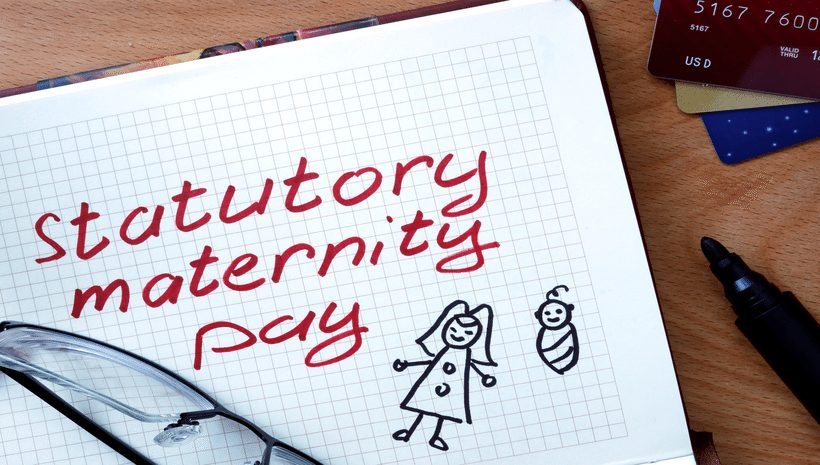 We received this cry for help recently – ‘My employee is entitled to Statutory Maternity Pay, but we can’t afford to pay it – what can we do?‘
Help is available from HMRC
If you can’t afford to make payments
You can apply for HM Revenue and Customs (HMRC) to pay you in advance if you can’t afford to make statutory payments.
Apply online to be paid in advance for:
You can apply up to 4 weeks before you want the first payment
 People Who Can’t Be Trustees
People aged under 18 (16 if your charity is a Company or Charitable Incorporated Organisation (CIO))
People who are disqualified by law (banned) from acting as charity trustees, including anyone who:
While a person is disqualified they will also be disqualified from holding positions with senior management functions (whether paid or unpaid) within the charity or charities concerned, unless the commission includes an exception in the disqualification order that this is not the case.
You can search the register of Removed Trustees here
 You need to tell HM Revenue and Customs (HMRC) straight away if you stop employing people.
You need to submit a final payroll return – either a Full Payment Submission (FPS) or Employer Payment Summary (EPS). You should:
You also need to:
If you start employing anyone in the same or next tax year, you should reopen your PAYE scheme by sending an FPS with your PAYEreference.
Your PAYE scheme continues to run if you stop employing staff for less than a whole tax year (eg if you run a seasonal business). You don’t need to give your employees a P45 if you keep them on your payroll.
More details can be found here
 A workplace pension is a way of saving for your retirement that’s arranged by your employer.
Some workplace pensions are called ‘occupational’, ‘works’, ‘company’ or ‘work-based’ pensions.
Your workplace pension still belongs to you. If you don’t carry on paying into the scheme, the money will remain invested and you’ll get a pension when you reach the scheme’s pension age.
You can join another workplace scheme if you get a new job.
If you do, you may be able to:
Ask your pension providers about your options.
If you move jobs but pay into an old pension, you may not get some of that pension’s benefits – check if they’re only available to current workers.
If you worked at your job for less than 2 years before leaving, you may be able to get a refund on what you’ve contributed. Check with your employer or the pension scheme provider.
You can find out more details about Workplace Pensions here
 Last Thursday we had a trip out to Women’s Work, Derby to the presentation of the Andrew Buxton Memorial Award 2017. The certificate and cheque were presented by Mrs Janet Buxton.
They won the award for presenting the best-kept set of accounts this year. One might think that this is the sole responsibility of the Finance Officer, but they are only able to do their job well if the rest of the team work with them. Women’s Work Derby are a shining example of how to work as a team, and their award is well deserved.
 Again, it’s nothing to do with acrobatics – but we liked the picture!!
The balance sheet is the second-most-important financial statement that an accounting system produces, after an income statement. A balance sheet reports on a business’s assets, liabilities, and reserves at a particular point in time
As long as you understand what assets and liabilities are, a balance sheet is easy to understand and interpret

