Author: DCAS

Training in Employment Law – Wednesday 14th October 2015

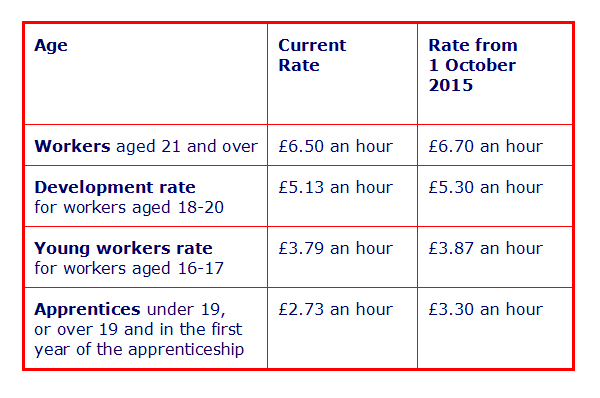
If your group employs paid staff, then this course is a MUST for you. To book your place, contact us here.   Andrew Monroe will demonstrate the 10 Golden Rules to help you avoid any mishaps, particularly with the changes in legislation this October.

Date: Wednesday 14th October 2015

Time: 09:45 – 12:30 (tea and coffee available from 09:30am)

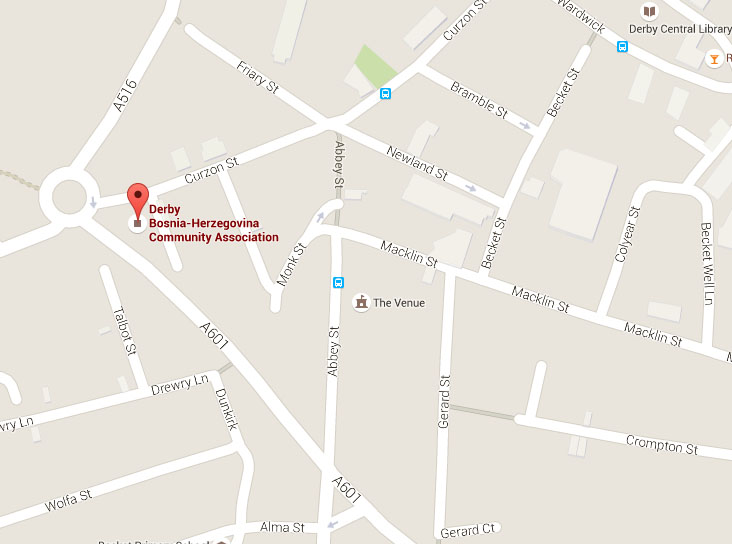
Venue: Derby Bosnia-Herzegovina Centre, 99 Curzon St, Derby DE1 1LN

Parking available at the Pay and Display car park in Abbey Street – entrance close to junction with Mercian Way A601.  Charge £3.80 for up to 4 hours.

Bosnia Herzegovena Centre Map


Financial Management for Voluntary Groups


ValerieFinancial Management for Voluntary Groups Training Course

Wednesday 7th October 2015 from 09:45 to 12:15

  Bosnia & Herzegovina Centre
99 Curzon Street Street
Derby
DE1 1LN

Margaret Mowles, ACA, will guide you through setting up manual book-keeping systems.

You will have the opportunity to review, update and simplify your existing systems.

Margaret is highly experienced in the roles of auditor and treasurer, so don’t miss the opportunity to come along to this valuable training session.

To book a place contact us here

Training Courses

Many thanks to Darren Wheatcroft for leading such a successful event yesterday on Pensions Auto Enrolment, and to all those who attended. Special thanks also to the Bosnian Centre for their hospitality.

Some comments from those attending:

Very easy to follow and understand the whole process

Useful information and advice, very well presented

Gave me a lot to think about

I understand a little better how to move forward

Don’t forget to enrol for our next training course ‘Financial Management for Voluntary Groups’ on Wednesday 7th October.  Click here to book a place

Pensions Auto Enrolment Seminar

Darren WheatcroftHave you booked your place yet?   Darren Wheatcroft is an expert in this field, and we are very lucky to have his input.  Please let us know in advance if you will be coming along – telephone 01332 364784, or to email us click here

It’s all happening at the Bosnian Centre DE1 1LN next Wednesday morning, 16th September. 

Bosnia Herzegovena Centre

Tea and coffee will be available from 9:30am, ready for a prompt start at 9:45, to finish by 12 noon.

Parking is limited, but the Abbey Street Pay and Display car park is very close by.

Annual Returns for the Charity Commission

Well, your final accounts have been successfully examined, now you need to send your Annual Return to the Charity Commission.  You are required by law to submit these within 10 months of the end of your Financial Year.

It is very easy to complete.  You will need the:

Total Income and Expenditure for the Year

Names of your Trustees

If you need any help, give Derby CAS a call on 01332364784, or you can go to the Government Website for guidance

Related Parties

Following on from our post on Conflict of Interest, we now highlight the subject of Related Parties.  It is the responsibility of a charity to identify and disclose related parties and related party transactions and implement adequate accounting and internal control systems so that related party transactions are appropriately identified. 

A simple example might be like this – if a Trustee suggests that his business partner in their decorators’ business be given a contract to paint the charity’s kitchen, then this would involve a conflict of interest, that business partner would be a Related Party, and the deal would involve a Related Party Transaction.  Nobody would have done anything wrong, but it must be accurately recorded and reported in the charity’s accounts.

The SORP 2005 gives a very detailed explanation of Related Parties in its Appendix 1 Glossary GL50.  Access the document here 

The Pricewaterhouse Cooper website suggests a Four Step approach to Related Party Management here

Conflict of Interest

ABOUT CONFLICTS OF INTEREST

You have a legal duty to act in your charity’s best interests when making decisions as  a trustee.  If there’s a decision to be made where a trustee has a personal or other interest, this is a conflict of interest and you won’t be able to comply with your duty unless you follow certain steps.

For example, if you’re a trustee, you would have a conflict of interest if the charity is thinking of making a decision that would mean:

  • you could benefit financially or otherwise from your charity, either directly or indirectly through someone you’re connected to
  • your duty to your charity competes with a duty or loyalty you have to another organisation or person

Conflicts of interest are common in charities – having a conflict of interest doesn’t mean you’ve done something wrong. But you need to act to prevent them from interfering with your ability to make a decision only in the best interests of the charity.

Follow a 3 step approach (identify, prevent, record) so that you are able to comply with your duty and avoid:

  • making decisions that could be overturned
  • risking your charity’s reputation
  • having to repay your charity if you make unauthorised payments to trustees

Legal requirement: you MUST declare a conflict of interest immediately you are aware of any possibility that your personal or wider interests could influence your decision-making.

More details can be found here
Holiday Entitlement and Holiday Pay

Almost all workers are legally entitled to 5.6 weeks’ paid holiday per year (known as statutory leave entitlement or annual leave).  An employer can include bank holidays as part of statutory annual leave. More details can be found here:

https://www.gov.uk/holiday-entitlement-rights

Workers are entitled to a week’s pay for each week of leave they take.

A week’s pay is worked out according to the kind of hours someone works and how they’re paid for the hours.  This includes full-time, part-time and casual workers. Help can be found here:

https://www.gov.uk/holiday-entitlement-rights/holiday-pay-the-basics

Holiday pay should be paid for the time when annual leave is taken.  An employer cannot include an amount for holiday pay in the hourly rate (known as ‘rolled-up holiday pay’).  If a current contract still includes rolled-up pay, it needs to be re-negotiated.