Category: Uncategorized

Happy Retirement Joyce!

After working with us at DCAS for the last fourteen years, Joyce Sawford is retiring!!

Joyce brought so much to us at DCAS firstly through her work on our accountancy book, “The Adventures of Mr Claw in the World of Charity Accountancy,” a book still available from the DCAS office, then the DCAS Newsletter and finally managing our website.

We are really grateful for all Joyce has done for us!!!

Since Joyce became an employee with us in 2011 things have not all been sunshine and rainbows.

We suffered the loss of our President Ted Cassidy, the person who started DCAS in 1991 and was always there to support us.

We lost three fantastic trustees, Andrew Buxton, Dave Goss and Ted Rasey all of whom brought amazing skills to us.

We also lost two members of staff, Maggie Mallender who worked for DCAS and Sue Jones who supported Ted Cassidy and Mark in the 1990s.

Their contributions to DCAS were massive and they will always be with us through the work that we do.

If this was not bad enough, DCAS like all other Derby groups, suffered the ending of Derby City Council funding in 2016.

Then of course COVID struck….

But in the words of a song called “The Wish”, ”If you are looking for a sad song, we ain’t going to play!”

Here at DCAS we are very proud of all we have achieved over the last 14 years. So a massive thanks to everyone who has been there for us and especially to the voluntary groups who have continued to use our services and of course to Joyce on her retirement!!

Mark Newey – Community Accountant at DCAS

Charity Purposes and Rules

As a trustee, you must run your charity in a way that complies with your charity’s governing document and the law.

This includes making sure your charity achieves its purposes.

Every trustee is responsible for this. Even if certain tasks are done by individual trustees, employees or volunteers, all trustees are responsible.

Every charity has a governing document. It contains:

  • your charity’s aims or purposes (often referred to as its ‘objects’)
  • rules for how it must operate

Focus on your charity’s purposes

You must deliver only your charity’s purposes. Your charity’s funds can only be spent on supporting the delivery of these purposes.

Read the governing document. Make sure you understand:

  • what your charity is set up to achieve (its purposes)
  • who your charity is there to benefit (its beneficiaries)
  • what your charity can or cannot do to carry out its purposes (its powers)

Checking that your charity is furthering its purposes is something you will do all the time as a trustee.

Drifting into activities that your charity is not set up to do

This can happen if you do not focus on your charity’s purposes. For example, where the charity:

  • wants to deliver a new service, but trustees have not checked that this new work fits the charity’s purposes
  • has applied for a grant, which must be spent on activities that do not match the charity’s purposes

Using charity funds or resources on other purposes is very serious. Trustees may have to repay the charity from their own money.

Keep your charity’s purposes under review to ensure that they properly reflect what the charity does.

Payments To Charity Trustees: What The Rules Are

Pay a trustee to be a trustee

When you become a trustee, you volunteer your services and usually won’t receive payment for your work.

Generally, charities cannot pay their trustees for simply being a trustee. Some charities do pay their trustees – they can only do so because it’s allowed by their governing document, by the Charity Commission or by the courts.

Trustee expenses

The law entitles charity trustees to claim legitimate expenses while engaged on trustee business. No separate authority is needed in the charity’s governing document or from the Commission.

Expenses are for out-of-pocket payments trustees have to make in order to carry out their duties, for example:

  • travel to and from trustee meetings
  • overnight accommodation
  • postage, telephone calls and broadband time for charity work
  • childcare or care of other dependants while attending meetings

Your charity should have a written agreement setting out what is classed as an expense, plus how to claim and approve expenses.

Some types of payment are often confused with expenses, when they are actually trustee benefits which HMRC will consider can be taxed as income. They can only properly be paid out of charity funds if there is suitable authority for doing so.

The following are all examples of payments which are not expenses, and which the Commission might need to authorise:

  • compensation for loss of earnings whilst carrying out trustee business
  • allowances: for example, a personal clothing allowance
  • honoraria (small or token sums not intended to reflect the true value of the service provided)
  • payment for use of a trustee’s property (or part of it) for storage and use of charity equipment

Pay a trustee to provide goods or services to the charity

Trustees could be paid for:

  • work such as plumbing or painting and any associated materials such as paint or plumbing parts
  • providing specialist services, such as estate agency or computer consultancy
  • providing premises or facilities for occasional use, for example as a meeting room
  • administration or secretarial work
  • supplying stationery to the charity

Pay someone who is connected to the charity

If someone is connected to a trustee, they are known as a ‘connected person’. For example:

  • a spouse or partner
  • siblings
  • a brother- or sister-in-law
  • parents
  • business partner
  • businesses connected to trustees
  • If a connected person is to be paid or employed by the charity, the trustee or trustees they are connected to must not be involved in any part of the process.

Buy a leaving gift for a trustee

You may decide that it is appropriate to use the charity’s money to buy a small gift as a leaving or retiring present for a trustee.

Small gifts usually do not need the Commission’s authority, provided that:

  • the value of the gift is minimal
  • the trustees agree it’s in the charity’s best interest

When to get Commission consent

If your governing document doesn’t allow you to pay trustees, you may need to get the Commission’s consent before you:

  • employ a trustee, or a connected person
  • pay a trustee for serving as a trustee
  • pay a trustee’s expenses or replace lost income
  • pay a trustee or connected person for providing goods or services to the charity

More detailed guidance can be found here

SSP Notice and Fit Notes

Your employees may be eligible for Statutory Sick Pay (SSP), which is £116.75 a week for up to 28 weeks.

Notice and fit notes

The employee should tell you they’re sick within the time limit set by you, or 7 days if you do not have one. You cannot insist they tell you in person or on a special form.

You do not have to pay Statutory Sick Pay (SSP) for any days the employee was late in telling you (unless there’s a good reason for the delay).

You can only ask for a fit note if your employee is off work for more than 7 days in a row (including non-working days).

Fit notes and asking for proof

You cannot withhold SSP if the employee is late sending you a fit note.

If your employee is off sick frequently or for a long time, HMRC has information about getting medical advice.

Fit notes

A fit note (sometimes called a sick note) must be issued by one of the following healthcare professionals:

  • GP or hospital doctor
  • registered nurse
  • occupational therapist
  • pharmacist
  • physiotherapist

The note can be printed or digital.

Other proof of sickness

If you agree, the employee can give you a similar document from a physiotherapist, podiatrist or occupational therapist instead of a fit note. This is called an Allied Health Professional (AHP) Health and Work Report.

More detailed information can be found here

Asking for a Pay Rise?

It’s coming to the end of the financial year for many charities and so employees might be thinking about asking for a pay rise. This is how the BBC website says employees should go about getting one!

Here are some of the DOs and DON’Ts to help you:

DO: Research properly

Go to a salary comparison website or talk to a recruitment agency or your Human Resources department (HR) to find out the kind of pay your job should be getting. You need hard evidence to back your pay rise – targets reached, outputs achieved.. Remember, it’s surprising how little the person who decides your salary, especially in a big organisation, may know about what you do.

DO: Pick a good time

Choose a moment when everyone is in a good mood say, after the (successful) completion of a project. Find out when your company plans its budget, so you can be sure you aren’t asking for the impossible.

DON’T: Ask for a pay rise too quickly

If your last salary increase was within the last year or you are new to the job, you are going to have to come up with some pretty good reasons why you need another so soon.

DO: Make sure you are in the right pay grade

Increasingly employers are structuring their pay into bands, reducing the need for individual negotiations.  For employers it can be very useful to have a structure. If you don’t and you start paying different people different amounts for doing the same job, an employer will find themselves in trouble.

DON’T: Ask for something outside your pay grade

However you can still be curious about your pay grade. There might be a mistake, or there might be a good reason why you should be at a different level from the one you’re in.

Although pay bands may limit how much you can ask for, they do have advantages: There can still be a wide range of movement within a pay band, It’s actually quite useful as it provides a framework for negotiations and gives you benchmarks you can measure yourself against.

DO: Be confident

The Monster website advises employees to “sit up straight, make eye contact with your boss. Confidence is key in this conversation, so speak slowly and deliberately, and use hand gestures to reinforce your points if this is your natural style.”

DON’T: Fidget, giggle nervously or allow your gaze to wander around the room or cover your mouth while speaking

Monster says this all suggests to the person on the other side of the desk that you are uncomfortable or insecure about what you’re asking for. It also says you should try not to fill in any silences or go off on a ramble. Just wait for a response and put the onus onto your manager to respond.

DO: Ask for an exact sum

Research at Columbia Business School finds that asking for a specific and precise salary works better than a rounded up figure. The researchers placed “negotiators” in scenarios such as buying jewellery or negotiating the sale of a used car. Some made precise offers, other made rounded up offers. Overall people offering a precise amount were seen to be more informed about the true value of the item for sale. One of the authors of the 2013 report, Professor Malia Mason, said: “The practical application of these findings — signalling that you are informed and using a precise number — can be used in any negotiation situation to imply you’ve done your homework,”

DON’T: Be vague

“Negotiators should remember that in this case, zeros really do add nothing to the bargaining table,” said Professor Mason. But bear in mind if you ask for a £1,245.25 pay rise you may have to explain what’s so important about the 25p – or the £245.

DON’T: Give up

If the employer does not want to give you more money now and they don’t think that’s your value, ask what will increase your value and what you have to do. That sort of feedback is very useful indeed and lays the groundwork for the next discussion.

You can find the full BBC article here

Happy Christmas !

Wishing you all a very Happy Christmas!

The DCAS Office will close for the holidays on Friday 20th December.

We re-open on Monday 6th January 2025, and wish you all peace, joy and happiness in 2025.

Zero Hours Contracts in the Employment Rights Bill 2024

What is the current policy/legal framework?

Zero hours contracts are used widely across the workforce, with data from August 2024 showing over 1 million people are on such contracts1 . Zero hours contracts can benefit both workers and employers but without proper safeguards this flexibility can become one-sided, with workers bearing the financial risk. Zero and low hours contracts can make it difficult for a person to manage their financial obligations and their personal life. The current system allows workers to work regularly for an employer but with no certainty about their future hours and earnings. Employers can offer and cancel shifts at last minute, so that much of the financial risk of changing demand is on their workers. That uncertainty can affect both financial security and well-being.

Policy Intent

The government is committed to ending one-sided flexibility and exploitative zero hours contracts, ensuring that all jobs provide a baseline of security and predictability so workers can better plan their lives and finances.

Employers who already provide this security and predictability for their workers will benefit from a level playing field. These measures will help drive up standards and eliminate undercutting. Greater clarity and advance notice of working patterns will help workers by making it easier to organise transport and childcare, and to meet other family commitments and caring responsibilities. The measures are also expected to encourage employers to plan ahead more, meaning that workers do not bear so much of the financial risk.

How will it work?

Right to guaranteed hours

The measures set out in the Bill will require employers to offer qualifying workers guaranteed hours reflecting the hours they worked during the reference period. The reference period will be set out in regulations and is anticipated to be 12 weeks. The qualifying workers will be able to reject an offer of guaranteed hours and remain on their current contract if they wish.

The government will set out further details around this process in regulations, including provisions around how it will be determined that the hours set out in an offer are determined to that an offer reflects the number of hours worked.

 In developing the regulations, the government intends to consult fully on the zero hours workers measures to inform the details of their implementation.

 The government is publishing a consultation on the application of the zero hours workers measures to agency workers, to ensure that the bill provisions are appropriately applied to this group.


National Minimum Wage and National Living Wage rates

Who gets the minimum wage?

Read the information on who is entitled to the minimum wage.

You can use the minimum wage calculator to check whether the National Minimum Wage or National Living Wage is being paid.

Contact Acas if you’re not getting the National Minimum Wage and think you should be.

These rates are for the National Living Wage (for those aged 21 and over) and the National Minimum Wage (for those of at least school leaving age). The rates change on 1 April every year.

21 and over18 to 20Under 18Apprentice
April 2024 (current rate)£11.44£8.60£6.40£6.40
April 2025£12.21£10.00£7.55£7.55

Apprentices

Apprentices are entitled to the apprentice rate if they’re either:

  • aged under 19
  • aged 19 or over and in the first year of their apprenticeship

Example

An apprentice aged 21 in the first year of their apprenticeship is entitled to a minimum hourly rate of £6.40

Apprentices are entitled to the minimum wage for their age if they both:

  • are aged 19 or over
  • have completed the first year of their apprenticeship

Example

An apprentice aged 21 who has completed the first year of their apprenticeship is entitled to a minimum hourly rate of £11.44

Autumn Budget and National Insurance Changes

Employer National Insurance changes from April 2025

The Autumn Budget announced there is to be an increase in the rate of National Insurance Contributions (NIC) paid by employers in respect of the wages they pay to their employees.  

Currently, employers pay employer NIC at the rate of 13.8% on wages over £9,100.  From April 2025, the rate employers must pay NIC would increase by 1.2% from 13.8% to 15%. 

In addition, the threshold where employer contributions become payable will6 fall from £9,100 to £5,000. The threshold will then remain at £5,000 until 5th April 2028. The plan is to increase the threshold annually for inflation. 

To support businesses, the Government intends to make changes to the Employment Allowance. The Employment Allowance is available to eligible businesses to reduce their employer NIC each tax year. The allowance currently allows eligible businesses with employer NIC bills of £100,000 or less in the previous tax year to deduct £5,000 from their employer NIC bill.  

The Chancellor announced an increase in the Employment Allowance from £5,000 to £10,500, and plans to remove the £100,000 eligibility threshold, expanding this to all eligible employers with employer NICs bills from 6th April 2025. 

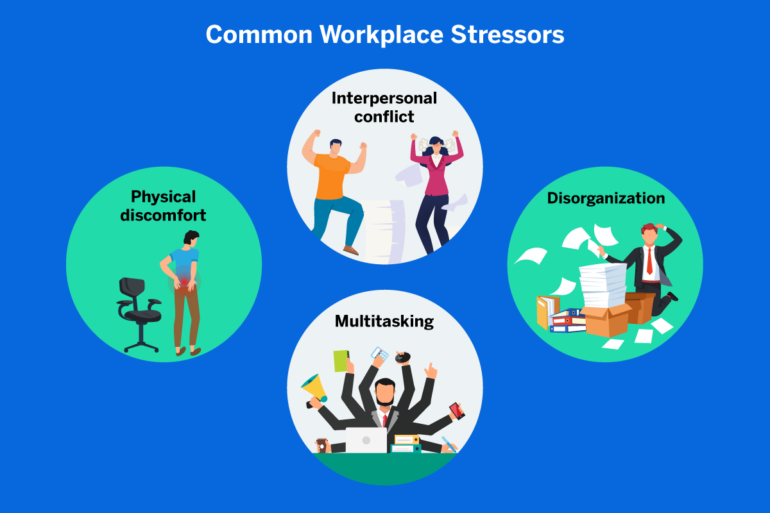
Managing Work-Related Stress

There are 2 main pieces of health and safety law which cover work-related stress:

  • the Health and Safety at Work Act 1974 – this puts a ‘duty of care’ on employers to protect their employees from the risk of stress at work
  • the Management of Health and Safety at Work Regulations 1999 – this requires all employers to make a ‘suitable and sufficient assessment’ of the risks to the health and safety of their employees at work

This means that by law employers must:

  • identify any risks to their employees’ health, for example by carrying out a risk assessment
  • take steps to prevent or reduce work-related stress 

Stress is defined by the Health and Safety Executive (HSE) as ‘the adverse reaction people have to excessive pressures or other types of demand placed on them’.

Some people benefit from a certain amount of pressure as it can keep them motivated. However, when there is too much pressure it can lead to stress.

Stress is not an illness but it can affect a person’s physical and mental health.

If not properly managed, stress can cause:

  • ‘burnout’ (physical and emotional exhaustion)
  • anxiety
  • depression

Stress can increase the risk of physical illnesses. For example:

  • heart disease
  • back pain
  • digestive conditions like irritable bowel syndrome
  • skin conditions

Spotting the signs of stress

Employees should look after their own health and wellbeing at work. If they are experiencing stress, they should talk to their manager as soon as they can. Managers should also look out for any signs of stress among their employees.

Signs of stress can include:

  • poor concentration
  • finding it hard to make decisions
  • being irritable or short tempered
  • tearfulness
  • tiredness
  • low mood
  • avoiding social events

If an employer or employee spots signs of stress, it can be helpful to have an informal chat. This can help them understand how the person is feeling and what support they need. Getting help could prevent more serious problems.

Managers could encourage their employees to do a ‘Wellness Action Plan’. This can help them to:

  • think about what’s causing them stress
  • talk to their manager and get the support they need

Use a Wellness Action Plan from Mind

More detailed information from ACAS can be found here