Voluntary National Insurance Contributions

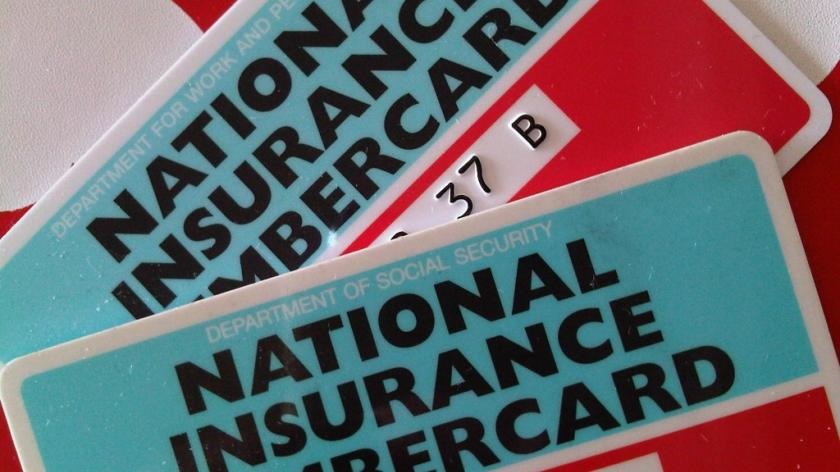
NI Card PictureGaps in your National Insurance record

You may get gaps in your record if you do not pay National Insurance or do not get National Insurance credits. This could be because you were:

  • employed but had low earnings
  • unemployed and were not claiming benefits
  • self-employed but did not pay contributions because of small profits
  • living or working outside the UK

Gaps can mean you will not have enough years of National Insurance contributions to either:

You may be able to pay voluntary contributions to fill any gaps if you’re eligible.  You can check your National Insurance Contributions status here

Decide if you want to pay voluntary contributions

Voluntary contributions do not always increase your State Pension. Contact the Future Pension Centre to find out if you’ll benefit from voluntary contributions.

You may also want to get financial advice before you decide to make voluntary contributions.

Making Tax Digital for VAT

Making-Tax-DigitalAll VAT-registered businesses who have not yet signed up for Making Tax Digital for VAT need to do so.

When to sign up

You must keep digital records from the start of your first Making Tax Digital accounting period.

Your last VAT accounting period before signing up to Making Tax Digital Submit your VAT Return between Do not sign up to Making Tax Digital between Sign up to Making Tax Digital from Your first Making Tax Digital accounting period
1 Jan to 31 Mar 2022 1 Apr to 7 May 2022 28 Apr to 7 May 2022 8 May 2022 1 Apr to 30 Jun 2022
1 Feb to 30 Apr 2022 1 May to 7 Jun 2022 31 May to 7 Jun 2022 8 June 2022 1 May to 31 Jul 2022
1 Mar to 31 May 2022 1 Jun to 7 Jul 2022 29 Jun to 7 Jul 2022 8 Jul 2022 1 Jun to 31 Aug 2022
1 Mar to 31 Mar (monthly submissions) 1 Apr to 7 May 2022 28 Apr to 7 May 8 May 2022 1 Apr to 30 Apr 2022

Before you sign up to Making Tax Digital for VAT you’ll need either:

  • a compatible software package that allows you to keep digital records and submit VAT Returns
  • bridging software to connect non-compatible software (like spreadsheets) to HMRC systems

If you use an agent or accountant, talk to them about what software you need.

Watch a video about getting compatible software.

The Importance of Volunteers

Mr Claw CoverDCAS has always been proud of its record in providing volunteering opportunities and this has in many occasions helped further the careers of our volunteers.
 
88D91407-BE0D-4A3A-B53D-6691E2548EF3This has never been more true than the case of Baker Salah, who after helping write our accounting manual ‘The Adventures of Mr Claw in the World of Charity Accounting’ has gone on to become a University Lecturer and will soon be awarded his Doctorate in Accounting and Finance.   Well done Baker!!!
 
Volunteers are the bedrock of the voluntary sector.  Without them we would not exist, as it is volunteers when acting as trustees who run charities.
 

Charity trustees

Charity trustees direct how a charity is run and help make sure it does what it was set up to do. This includes making sure the charity:

  • sticks to its charitable mission
  • has the money it needs
  • spends that money responsibly on the activities it was raised for
  • follows the law and doesn’t break its own rules

Charity trustees are also known as:

  • directors
  • board members
  • governors
  • committee members

Find out more here

Workplace Absence Policies

ACAS logo jpegChecking how your workplace deals with absence

Apart from annual holiday entitlement, an employee might need time off work for reasons including:

  • short-term and long-term sickness, including mental health conditions
  • helping a child, partner or relative
  • medical appointments
  • pregnancy-related illnesses and appointments, including IVF
  • bad weather or travel disruptions, making travelling to work difficult or impossible
  • bereavement

Each workplace might have different rules on what they see as acceptable reasons for absence and what they will pay.  For this reason, every workplace should have its own absence policy, so it’s important to check this.

ACAS has some very helpful guidelines on putting together an Absence Policy

What an absence policy should cover

An absence policy should make clear exactly what’s expected from both the employer and employee if the employee needs to take time off work.

An absence policy should include:

If your workplace does not have an absence policy, the employee can ask their employer or HR manager what to do if they need time off work. The employer should follow best practice as outlined in this guide.

There are some areas that are covered by law, for example:

For more support creating or reviewing an absence policy, ACAS provides:

Statutory Payments 2022-2023

DWPStatutory Maternity, Paternity, Adoption, Shared Parental and Parental Bereavement Pay

Use the maternity, adoption and paternity calculator for employers to work out your employee’s:

  • Statutory Maternity Pay (SMP)
  • paternity or adoption pay
  • qualifying week
  • average weekly earnings
  • leave period

These rates apply from 3 April 2022.

Type of payment or recovery 2022 to 2023 rate
Statutory Maternity Pay — weekly rate for first 6 weeks 90% of the employee’s average weekly earnings
Statutory Maternity Pay — weekly rate for remaining weeks £156.66 or 90% of the employee’s average weekly earnings, whichever is lower
Statutory Paternity Pay (SPP) — weekly rate £156.66 or 90% of the employee’s average weekly earnings, whichever is lower
Statutory Adoption Pay (SAP) — weekly rate for first 6 weeks 90% of the employee’s average weekly earnings
Statutory Adoption Pay — weekly rate for remaining weeks £156.66 or 90% of the employee’s average weekly earnings, whichever is lower
Statutory Shared Parental Pay (ShPP) —weekly rate £156.66 or 90% of the employee’s average weekly earnings, whichever is lower
Statutory Parental Bereavement Pay (SPBP) — weekly rate £156.66 or 90% of the employee’s average weekly earnings, whichever is lower
SMP, SPP, ShPP, SAP or SPBPproportion of your payments you can recover from HMRC 92% if your total Class 1 National Insurance (both employee and employer contributions) is above £45,000 for the previous tax year103% if your total Class 1 National Insurance for the previous tax year is £45,000 or lower

Statutory Sick Pay (SSP)

The same weekly Statutory Sick Pay rate applies to all employees. However, the amount you must actually pay an employee for each day they’re off work due to illness (the daily rate) depends on the number of ‘qualifying days’ they work each week.

Use the Statutory Sick Pay calculator to work out your employee’s sick pay, or use these rates.

Unrounded daily rates Number of qualifying days in week 1 day to pay 2 days to pay 3 days to pay 4 days to pay 5 days to pay 6 days to pay 7 days to pay
£14.1929 7 £14.20 £28.39 £42.58 £56.78 £70.97 £85.16 £99.35
£16.5583 6 £16.56 £33.12 £49.68 £66.24 £82.80 £99.35
£19.87 5 £19.87 £39.74 £59.61 £79.48 £99.35
£24.8375 4 £24.84 £49.68 £74.52 £99.35
£33.1167 3 £33.12 £66.24 £99.35
£49.675 2 £49.68 £99.35
£99.35 1 £99.35

Student loan and postgraduate loan recovery

If your employees’ earnings are above the earnings threshold, record their student loan and postgraduate loan deductions in your payroll software. It will automatically calculate and deduct repayments from their pay.

Rate or threshold 2022 to 2023 rate
Employee earnings threshold for student loan plan 1 £20,195 per year
£1,682.91 per month
£388.36 per week
Employee earnings threshold for student loan plan 2 £27,295 per year
£2,274.58 per month
£524.90 per week
Employee earnings threshold for student loan plan 4 £25,375 per year
£2,114.58 per month
£487.98 per week
Student loan deductions 9%
Employee earnings threshold for postgraduate loan £21,000 per year
£1,750.00 per month
£403.84 per week
Postgraduate loan deductions 6%

National Minimum Wage and National Living Wage rates

cash jpegThese rates are for the National Living Wage (for those aged 23 and over) and the National Minimum Wage (for those of at least school leaving age). The rates change on 1 April every year.

Current rates from April 1st 2022

23 and over 21 to 22 18 to 20 Under 18 Apprentice
April 2022 £9.50 £9.18 £6.83 £4.81 £4.81

The hourly rate for the minimum wage depends on your age and whether you’re an apprentice. You must be at least:

  • school leaving age to get the National Minimum Wage
  • aged 23 to get the National Living Wage – the minimum wage will still apply for workers aged 22 and under

Apprentices

Apprentices are entitled to the apprentice rate if they’re either:

  • aged under 19
  • aged 19 or over and in the first year of their apprenticeship

Who gets the minimum wage

Read the information on who is entitled to the minimum wage.

You can use the minimum wage calculator to check whether the National Minimum Wage or National Living Wage is being paid.

Contact Acas if you’re not getting the National Minimum Wage and think you should be.

Final Payment Submissions to HMRC

D55F3A85-4C8C-4000-8482-9D1DEE8C5C44It’s time to prepare for making your last Full Payment Submission or Employer Payment Summary of the year

From HMRC
Your last Full Payment Submission (FPS) or Employer Payment Summary (EPS) of the year (up to and including 5 April 2022) needs to include an indicator that you are making the final submission. This tells us you have sent us everything you expected to send and we can finalise our records for you and your employees.

Some commercial payroll software will not let you put the indicator on an FPS. If that’s the case, send your last FPS and then send an EPS with the indicator ticked. You can also send an EPS with the indicator ticked if you forgot to put the indicator on your last FPS submission for the tax year.

You also need to prepare to give your employees a P60 if they are in your employment on 5 April 2022. You have got until 31 May 2022 to do this.

If you are not going to pay anyone again this tax year, remember to send an EPS with the indicator ticked to show you did not pay anyone in the final pay period and it is the final submission. You have until 19 April 2022 to do this, but you will get a message from the Generic Notification Service if you file it after 11 April 2022.

Student and postgraduate loans: updated thresholds and rates from 6 April 2022

The student and postgraduate loans thresholds and rates are as follows:

Plan 1 ― £20,195

Plan 2 ― £27,295

Plan 4 ― £25,375

Postgraduate loan ― £21,000

Deductions for:

  • plans 1, 2 and 4 remain at 9% for any earnings above the respective thresholds
  • postgraduate loans remain at 6% for any earnings above the respective thresholds

Gift Aid Declarations

33E713CC-CCCF-4814-B5DB-A033FAEAC0AAA Gift Aid declaration allows charities and community amateur sports clubs (CASCs) to claim tax back on eligible donations.

It’s important that you keep records of declarations and Gift Aid payments.

If you make a Gift Aid claim without collecting a declaration from the donor, HMRC may ask you to repay the equivalent amount in tax.

Declaration formats

A declaration by a donor can be made in writing, verbally or online. Whichever format you use, donors must provide the required information for your Gift Aid claim to be valid.

HMRC template declarations

HMRC provides free template declaration forms for you to use. You don’t have to use a template, but if you do, you can be sure that declarations will meet HMRC’s requirements.

You can include additional information to suit your charity or CASC’s needs, eg reference numbers.

What declarations must include

There is no set design for a declaration form or a verbal declaration, but it must include:

  • the name of your charity or CASC
  • the donor’s full name
  • the donor’s home address
  • whether the declaration covers past, present or future donations or just a single donation
  • a statement that the donor wants Gift Aid to apply (this could be a tick box on a written or online declaration)
  • an explanation that the donor needs to pay the same amount or more of UK Income Tax and/or Capital Gains Tax as all charities and CASCs will claim on the donor’s gifts in a tax year and that the donor is responsible to pay any difference   

For more detailed information click here

The 6 Main Duties of Trustees

7CF0F4E4-98CB-4DC0-A5EF-6A1ABE6BCA14Trustees have overall control of a charity and are responsible for making sure it’s doing what it was set up to do. Their main duties are:

1. Ensure your charity is carrying out its purposes for the public benefit

You and your co-trustees must make sure that the charity is carrying out the purposes for which it is set up, and no other purpose.

2. Comply with your charity’s governing document and the law

You and your co-trustees must:

  • make sure that the charity complies with its governing document
  • comply with charity law requirements and other laws that apply to your charity

3. Act in your charity’s best interests

You must:

  • do what you and your co-trustees (and no one else) decide will best enable the charity to carry out its purposes
  • with your co-trustees, make balanced and adequately informed decisions, thinking about the long term as well as the short term
  • avoid putting yourself in a position where your duty to your charity conflicts with your personal interests or loyalty to any other person or body
  • not receive any benefit from the charity unless it’s properly authorised and is clearly in the charity’s interests; this also includes anyone who is financially connected to you, such as a partner, dependent child or business partner

4. Manage your charity’s resources responsibly

You must act responsibly, reasonably and honestly. This is sometimes called the duty of prudence. Prudence is about exercising sound judgement.

5. Act with reasonable care and skill

As someone responsible for governing a charity, you:

  • must use reasonable care and skill, making use of your skills and experience and taking appropriate advice when necessary
  • should give enough time, thought and energy to your role, for example by preparing for, attending and actively participating in all trustees’ meetings

6. Ensure your charity is accountable

You and your co-trustees must comply with statutory accounting and reporting requirements.

Find out more here

Prepare for the Health and Social Care Levy

D55F3A85-4C8C-4000-8482-9D1DEE8C5C44Your National Insurance contributions might increase when the Health and Social Care Levy comes into effect in the UK (England, Scotland, Wales and Northern Ireland) on 6 April 2022.

For tax year 6 April 2022 to 5 April 2023

Employer Class 1, employee Class 1, Class 1A, Class 1B and Class 4 National Insurance contributions will increase, for one year, by 1.25 percentage points.

From 6 April 2023

The National Insurance contribution rates will go back down to 2021 to 2022 levels, and the levy will become a separate new tax of 1.25%.

How the levy will affect you

Between 6 April 2022 and 5 April 2023

If you are an employer, employee or self-employed (and below the State Pension age), you will pay the 1.25 percentage points increase in National Insurance contributions.

From 6 April 2023

The separate levy of 1.25% will apply to the same amounts for the following classes of National Insurance contributions:

  • Class 1 that are above the primary and secondary thresholds
  • Class 1A and Class 1B for employers
  • Class 4 for the self-employed

If you’re an employer

If your business pays Class 1, Class 1A or Class 1B National Insurance contributions, you’ll need to start paying the 1.25 percentage points increase in contributions from 6 April 2022. You’ll then need to pay the separate 1.25% levy from 6 April 2023.

You may also have to pay the separate levy from 6 April 2023 for employees who are over State Pension age.

HMRC is asking employers, where appropriate, to include the following message on payslips:

1.25% uplift in NICs, funds NHS, health & social care

Find out more details here