Tag: ACAS

National Minimum Wage and National Living Wage rates

The government reviews minimum wage rates every year and they’re usually updated in April.  Check when rate increases must be paid.

From 1 April 2024, workers aged 21 and over will be entitled to the National Living Wage.

21 and over18 to 20Under 18Apprentice
April 2024£11.44£8.60 £6.40 £6.40 

It’s against the law for an employer to pay less than the National Minimum Wage or National Living Wage.
They also must keep accurate pay records and make them available when requested.
If an employer has not been paying the correct minimum wage, they should resolve the problem as soon as possible.
The employer must also resolve any backdated non-payment of minimum wage. This is even if the employee or worker no longer works for them.

It’s against the law for an employer to pay less than the National Minimum Wage or National Living Wage.
They also must keep accurate pay records and make them available when requested.
If an employer has not been paying the correct minimum wage, they should resolve the problem as soon as possible. The employer must also resolve any backdated non-payment of minimum wage. This is even if the employee or worker no longer works for them.

It’s against the law for an employer to pay less than the National Minimum Wage or National Living Wage.
They also must keep accurate pay records and make them available when requested.
If an employer has not been paying the correct minimum wage, they should resolve the problem as soon as possible.
The employer must also resolve any backdated non-payment of minimum wage. This is even if the employee or worker no longer works for them.

ACAS has more information here

How To Raise A Problem At Work Informally

If you have a problem at work you should try raising it informally with your employer first.

You may feel nervous about raising a problem, but employers are often open to resolving problems quickly without going through a formal procedure.

For some very serious problems, an informal chat might not be the best approach. You can raise a formal grievance to your employer.

Have an informal chat with your employer first

You should talk to someone you feel comfortable with where possible first, for example your line manager, another manager or someone in HR.

An informal chat with your manager or employer can range from a quiet word to a more structured meeting.

If you need more support, some organisations have trained members of staff you could speak to, for example:

  • fair treatment ambassadors
  • mental health first aiders
  • health and wellbeing representatives

Your work might also have an employee assistance programme (EAP) you can use.

You can talk to a trade union representative, if you’re a member of a trade union.

Preparing for an informal meeting

If you and your employer or manager set up an informal meeting, it’s a good idea to:

  • check the ACAS website for information about your problem and how it might be dealt with
  • prepare what you want to say, for example how to explain what you’re unhappy about
  • think about what you’d like your employer to do

You can ask someone to go with you, for example:

  • someone you work with
  • a trade union representative
  • an official employed by a trade union

You can ask to bring someone else for extra assistance or support, for example a translator or care worker.

It’s usually up to your employer to agree if you can bring someone else to the meeting. If discrimination law applies your employer might have to allow someone to come with you to help remove any disadvantage.

For example, allowing a support or care worker to attend to provide support could be considered a reasonable adjustment if it would reduce any disadvantage a disabled person might have in raising their problem.

At the meeting

At the meeting you can:

  • explain what the problem is and what you think should happen
  • show your manager or employer evidence if necessary, for example your payslips and contract if you think your holiday pay was wrong
  • take notes

Resolving the problem should be a two-way process. Your manager should allow you to explain the problem. You should also listen to what they have to say.

It might not always be possible to solve the problem in the way you’d like, but you can try to find a solution that works for both of you.

Raising the problem formally

If you cannot reach a solution to the problem, you can raise the issue formally. This is known as ‘raising a grievance’.

If raising a formal grievance does not resolve the problem, you might be able to make a claim to an employment tribunal.

Workplace Absence Policies

ACAS logo jpegChecking how your workplace deals with absence

Apart from annual holiday entitlement, an employee might need time off work for reasons including:

  • short-term and long-term sickness, including mental health conditions
  • helping a child, partner or relative
  • medical appointments
  • pregnancy-related illnesses and appointments, including IVF
  • bad weather or travel disruptions, making travelling to work difficult or impossible
  • bereavement

Each workplace might have different rules on what they see as acceptable reasons for absence and what they will pay.  For this reason, every workplace should have its own absence policy, so it’s important to check this.

ACAS has some very helpful guidelines on putting together an Absence Policy

What an absence policy should cover

An absence policy should make clear exactly what’s expected from both the employer and employee if the employee needs to take time off work.

An absence policy should include:

If your workplace does not have an absence policy, the employee can ask their employer or HR manager what to do if they need time off work. The employer should follow best practice as outlined in this guide.

There are some areas that are covered by law, for example:

For more support creating or reviewing an absence policy, ACAS provides:

National Minimum Wage and National Living Wage rates

cash jpegThese rates are for the National Living Wage (for those aged 23 and over) and the National Minimum Wage (for those of at least school leaving age). The rates change on 1 April every year.

Current rates from April 1st 2022

23 and over 21 to 22 18 to 20 Under 18 Apprentice
April 2022 £9.50 £9.18 £6.83 £4.81 £4.81

The hourly rate for the minimum wage depends on your age and whether you’re an apprentice. You must be at least:

  • school leaving age to get the National Minimum Wage
  • aged 23 to get the National Living Wage – the minimum wage will still apply for workers aged 22 and under

Apprentices

Apprentices are entitled to the apprentice rate if they’re either:

  • aged under 19
  • aged 19 or over and in the first year of their apprenticeship

Who gets the minimum wage

Read the information on who is entitled to the minimum wage.

You can use the minimum wage calculator to check whether the National Minimum Wage or National Living Wage is being paid.

Contact Acas if you’re not getting the National Minimum Wage and think you should be.

Supporting mental health at work

2817455C-98F1-4E72-9769-8E9C7D242422Information from ACAS

Employers have a ‘duty of care’. This means they must do all they reasonably can to support their employees’ health, safety and wellbeing.

If an employee has a mental health issue, it’s important their employer takes it seriously. For example, it’s a good idea to talk to the employee to find out what support they might need at work.

There are many types of mental health issue. An issue can happen suddenly, because of a specific event in someone’s life, or it can build up gradually over time.

Common mental health issues include:

  • stress (this is not classed as a medical condition but it can still have a serious impact on wellbeing)
  • depression
  • anxiety

Less common ones include:

  • bipolar disorder
  • schizophrenia

Creating a supportive environment

It’s helpful if employers create an environment where staff feel able to talk openly about mental health.

For example:

  • treating mental and physical health as equally important
  • making sure employees have regular one-to-ones with their managers, to talk about any problems they’re having
  • encouraging positive mental health, for example arranging mental health awareness training, workshops or appointing mental health ‘champions’ who staff can talk to

Employers can find out more about promoting positive mental health at work, including:

  • understanding mental health 
  • creating a mental health strategy
  • educating the workforce 

More information can be found here

Flexible Working

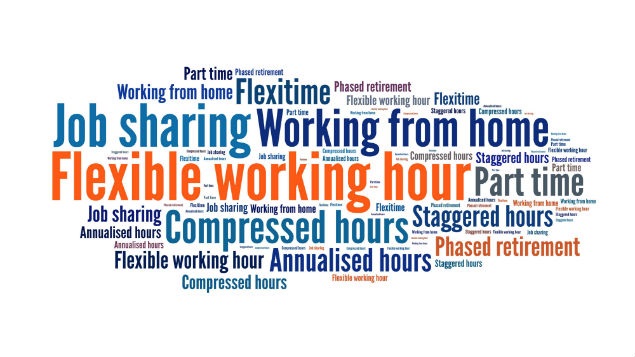
flexible workingFlexible working is a way of working that suits an employee’s needs, for example, you may want to
  • reduce your hours to work part-time
  • change your start and finish time
  • have flexibility with your start and finish time (sometimes known as ‘flexitime’)
  • do your hours over fewer days (‘compressed hours’)
  • work from home or elsewhere (‘remote working’), all or part of the time
  • share the job with someone else

All employees have the legal right to request flexible working – not just parents and carers.

This is known asmaking a statutory application’.

Employees must have worked for the same employer for at least 26 weeks to be eligible.

If this is of interest to you, and you want to find out more, ACAS have really helpful advice here

Sick Pay and Holiday Pay

Sick Pay and Holidays jpegACAS answers questions about sick pay and holiday pay

Employees cannot get sick pay and holiday pay at the same time.

Taking holiday while off sick

An employee can take holiday (annual leave) while off sick. For example, if they: 

  • are not physically able to work, but physically able to take a holiday
  • have a mental health condition that might be helped by a holiday
  • are off sick long term and a holiday might help with their recovery

It’s up to an employee to request holiday while off sick. An employer cannot force an employee to take holiday while off sick.

If the employer approves the employee’s holiday request:

  • sick leave can be paused while the employee takes holiday
  • the employee should get holiday pay while they are on holiday

After the employee has taken the holiday, sick leave can continue if they’re still not well enough to return to work.

If an employee is sick on holiday 

An employee must report their sickness to their employer if they want to take any holiday as sick leave.

In this case the employee can:

  • get sick pay for the time they were sick (as long as they areentitled to sick pay)
  • keep the time they were sick to use as holiday another time

More information from ACAS can be found here

More information from the government can be found here

Managing redundancy for pregnant employees or those on maternity leave

pram-jpegThe beginning of pregnancy to the end of maternity leave is a ‘protected period’ during which a woman is entitled to special consideration if this is necessary to make good any disadvantage she may otherwise experience

The law makes it clear that: 

  • During the protected period, unfavourable treatment of a woman because she is pregnant or on maternity leave is unlawful. This means a woman doesn’t have to compare her treatment with anyone else to show direct pregnancy and maternity discrimination
  • A woman on maternity leave has the right to return to the same job before she left; an interim employee cannot be given her job even if you think the person is a better employee.
  • Selecting a woman for redundancy because of her pregnancy, maternity leave or a related reason is automatically unfair dismissal as well as being unlawful discrimination.
  • Failure to consult a woman on maternity leave about possible redundancy is likely to be unlawful discrimination.
  • A woman made redundant while on maternity leave must be offered any suitable alternative vacancy if you have one. She doesn’t need to apply for it.
  • Special provision for a woman in connection with pregnancy or childbirth is not sex discrimination against a man provided that the action you take does not go beyond what is necessary to rectify her disadvantage.

If you are reorganising and/or need to make employees redundant and this includes someone who is pregnant or on maternity leave, you need to:
· Check the redundancy is genuine and necessary
· Ensure you consult and keep in touch
· Establish non-discriminatory selection criteria
· Consider alternative work.

The full guidance from ACAS can be found here

Inducting New Staff

New Employee ChecklistACAS offers some good advice for employers on how to settle in a new employee once they have accepted a job offer.

They suggest that you use a checklist to ensure that both the new employee and their line manager know what has or has not been covered at any given time.

They both need a copy, which should be kept up to date, so they can follow what is happening.  It can also act as a reminder of anything that needs particular attention.

While a checklist is helpful, it should not turn the induction into a tick-box exercise.  It should be the responsibility of both management and the new starter to ensure all items are properly covered.

The checklist is often drawn up by the employer’s HR department in consultation with other staff involved, such as a safety officer, line manager/supervisor, employee representative and training officer.

A sample checklist, which is free to download and use, can be found here

The ACAS guide to induction can be found here

What To Do When An Employee Resigns

resignation letterAn employer can’t refuse to accept someone’s resignation and they must follow certain procedures.

When a member of staff resigns you must:

  • get them to confirm their resignation in writing.  Verbal resignations given in the heat of the moment could lead to claims of unfair dismissal – always ask for resignations to be given in writing.
  • tell them what their notice period is
  • agree when their last day at work will be
  • confirm whether they should work all or part of their notice period

Employee decisions to retire are a form of resignation.

Verbal resignations given in the heat of the moment could lead to claims of unfair dismissal – always ask for resignations to be given in writing.

To make their departure as smooth as possible, you might also:

  • Agree with the employee the terms of an announcement to other staff concerning their departure, if appropriate.
  • Organise a handover period. This allows for a smooth handover to existing staff or the employee’s replacement of key tasks and responsibilities.
  • Arrange an exit interview.  You can then use their response to determine whether there are any underlying issues to be addressed.
  • Retrieve security passes and all other property of your business, eg tools, uniforms, computers and company cars.
  • Organise their final payment including all money owing, eg pay in lieu of working a notice period, money for unused holidays, overtime and bonus payments.
  • Part on good terms. The person leaving may become a client or may be able to refer business to you. Equally, a disgruntled ex-employee can damage the reputation of your business if they leave on poor terms, eg having identified you as their previous employer then writing about their experiences as your employee on a social networking website or blog. This may be the case where the employee has details on their profile which identifies them as having worked for you.
  • Organise a farewell gift or party, if appropriate. Acknowledgement of good service appreciated is valuable for remaining staff morale and the promoting of a positive organisational culture.
  • Make a point of saying goodbye on the actual day the person leaves and thank them again for all their hard work.
  • Be careful about refernces. You should consider carefully the legal implications of providing a reference:
    • make sure that what you say is true, accurate and a fair representation of the person
    • an ex-employee could bring an action against you for libel, discrimination or defamation of character through a court or tribunal, if they consider the reference to be inaccurate

Helpline

Contact the Advisory, Conciliation and Arbitration Service (Acas) if you have any questions about handling staff resignations.