Tag: Fit Note

Changes To The Fit Note

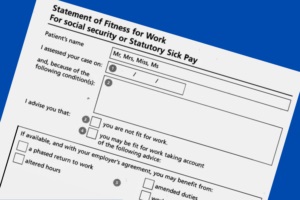
You may notice changes to the fit note you receive from a healthcare professional as a new version of the fit note that was introduced in April 2022. The requirement for the healthcare professional to sign the form in ink has been removed and replaced by the issuer’s name and profession.

There will be a period during which both the new and previous version of the fit notes are legally valid whilst relevant IT systems are updated and stocks of paper fit notes are replaced.

5 things to do if you are given a fit note by an employee

  1. Check whether your employee’s healthcare professional has assessed that they are not fit for work or may be fit for work.
  2. Check how long your employee’s fit note applies for, and whether they are expected to be fit for work when their fit note expires.
  3. If your employee may be fit for work, discuss their fit note with them and see if you can agree any changes to help them come back to work while it lasts.
  4. If your employee is not fit for work, or if they may be fit for work but you can’t agree any changes, use the fit note as evidence for your sick pay procedures.
  5. Consider taking a copy of the fit note for your records (your employee should keep the original).

Key things to keep in mind

  • Supporting someone with a health condition to come back to work can save you money and minimise disruption
  • People can often come back to work before they are 100% fit – in fact work can even help their recovery.
  • Often, a few simple changes can help someone with a health condition come back to work earlier.
  • Access to Work can help employees with a disability or health condition. This includes paying towards equipment or support.
  • If your employee is assessed as may be fit for work, their fit note will help you discuss with them what these changes might be.
  • The fit note won’t tell you what changes to make, but will give you advice about how your employee’s health affects what they can do at work.
  • If you can’t make any changes to take account of the advice in the fit note, you don’t have to.
  • The fit note tells you whether your employee is expected to be fit for work at the end of their fit note.
  • If your employee’s healthcare professional thinks they are fit for work, they will not be issued with a fit note.
  • Your employee can come back to work at any time, even if this is before their fit note expires. They do not need to go back to their healthcare professional first.
  • The fit note belongs to your employee and they should keep the original. You may decide to take a copy for your records.

Fit Note

The fit note – the basics

Fit NoteGeneral rules of the fit note

People can only be given a fit note if their doctor considers their fitness for work is impaired.  If someone is fit for work, they will not be given a fit note.

Doctors cannot issue fit notes during the first 7 calendar days of sickness absence. Employees can self-certify for this time, visit Employee’s statement of sickness to claim Statutory Sick Pay for a template form.  If your organisation requires medical evidence for the first 7 days of sickness absence, it is your responsibility to arrange and pay for this.

Fit notes can be handwritten or printed, but must always be signed by a doctor. If they are printed, you can scan the barcode using a 2D matrix scanner so that you can add it to your sickness records.  It also confirms that the fit note is genuine.

If a GP has issued a fit note, it should include the address of the practice.  If a hospital doctor has issued the fit note, you may also receive a yellow Med 10 form stating the time your employee has spent as a hospital inpatient.

5 things to do if you’re given a fit note BY AN EMPLOYEE

  1. Check whether your employee’s doctor has assessed that they are not fit for work, or may be fit for work.
  2. Check how long your employee’s fit note applies for, and whether they are expected to be fit for work when their fit note expires.
  3. If your employee may be fit for work, discuss their fit note with them and see if you can agree any changes to help them come back to work while it lasts.
  4. If your employee is not fit for work, or if they may be fit for work but you can’t agree any changes, use the fit note as evidence for your sick pay procedures.
  5. Consider taking a copy of the fit note for your records (your employee should keep the original).

More details of Fit Notes can be found here

Eligibility for Statutory Sick Pay

Sick Leave | HR SolutionsYou can get £94.25 per week Statutory Sick Pay (SSP) if you’re too ill to work. It’s paid by your employer for up to 28 weeks.

You need to qualify for SSP and have been off work sick for 4 or more days in a row (including non-working days).

You cannot get less than the statutory amount. You can get more if your company has a sick pay scheme (or ‘occupational scheme’) – check your employment contract.

Eligibility

To qualify for Statutory Sick Pay (SSP) you must:

  • be classed as an employee and have done some work for your employer
  • have been ill for at least 4 days in a row (including non-working days)
  • earn an average of at least £118 per week
  • tell your employer you’re sick before their deadline – or within 7 days if they do not have one

Agency workers are entitled to Statutory Sick Pay.

Exceptions

You will not qualify if you:

  • have received the maximum amount of SSP (28 weeks)
  • are getting Statutory Maternity Pay

You can still qualify if you started your job recently and you have not received 8 weeks’ pay yet. Ask your employer to find out more.

Linked periods of sickness

If you have regular periods of sickness, they may count as ‘linked’. To be linked, the periods must:

  • last 4 or more days each
  • be 8 weeks or less apart

You’re no longer eligible for SSP if you have a continuous series of linked periods that lasts more than 3 years.

Fit notes (or sick notes)

You only have to give your employer a fit note if you’re off sick for more than 7 days in a row (including non-working days).

You can get a fit note from your GP or hospital doctor. If your employer agrees, a similar document can be provided by a physiotherapist, podiatrist or occupational therapist instead. This is called an Allied Health Professional (AHP) Health and Work Report.

If you’re not eligible or your SSP ends

You may be able to apply for Universal Credit or Employment and Support Allowance (ESA). You can use form SSP1 to support your application.

If your SSP is ending your employer must send you form SSP1 either:

  • within 7 days of your SSP ending, if it ends unexpectedly while you’re still sick
  • on or before the beginning of the 23rd week, if your SSP is expected to end before your sickness does

If you do not qualify for SSP your employer must send you form SSP1 within 7 days of you going off sick.

Employers can find Form SSP1 here