Tag: health

SSP Notice and Fit Notes

Your employees may be eligible for Statutory Sick Pay (SSP), which is £116.75 a week for up to 28 weeks.

Notice and fit notes
The employee should tell you they’re sick within the time limit set by you, or 7 days if you do not have one. You cannot insist they tell you in person or on a special form.

You do not have to pay Statutory Sick Pay (SSP) for any days the employee was late in telling you (unless there’s a good reason for the delay).

You can only ask for a fit note if your employee is off work for more than 7 days in a row (including non-working days).

Fit notes and asking for proof

You cannot withhold SSP if the employee is late sending you a fit note.

If your employee is off sick frequently or for a long time, HMRC has information about getting medical advice.

Fit notes

A fit note (sometimes called a sick note) must be issued by one of the following healthcare professionals:

  • GP or hospital doctor
  • registered nurse
  • occupational therapist
  • pharmacist
  • physiotherapist

The note can be printed or digital.

Other proof of sickness

If you agree, the employee can give you a similar document from a physiotherapist, podiatrist or occupational therapist instead of a fit note. This is called an Allied Health Professional (AHP) Health and Work Report.
More detailed information can be found here

Managing Work-Related Stress

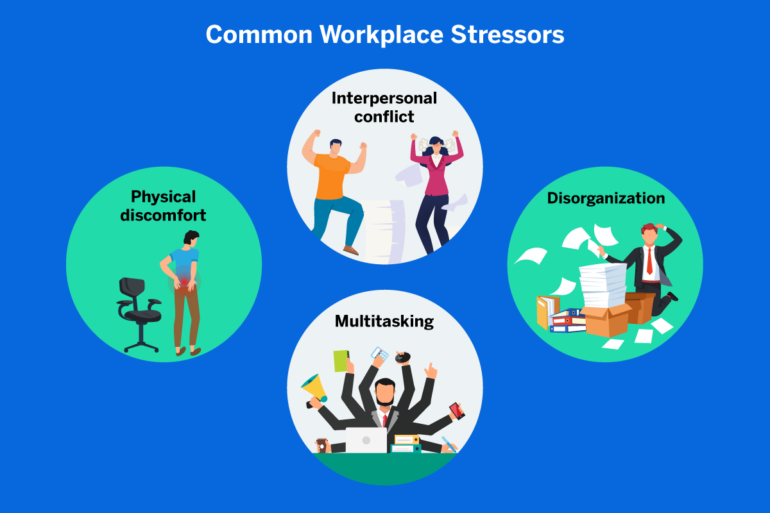
There are 2 main pieces of health and safety law which cover work-related stress:

  • the Health and Safety at Work Act 1974 – this puts a ‘duty of care’ on employers to protect their employees from the risk of stress at work
  • the Management of Health and Safety at Work Regulations 1999 – this requires all employers to make a ‘suitable and sufficient assessment’ of the risks to the health and safety of their employees at work

This means that by law employers must:

  • identify any risks to their employees’ health, for example by carrying out a risk assessment
  • take steps to prevent or reduce work-related stress 

Stress is defined by the Health and Safety Executive (HSE) as ‘the adverse reaction people have to excessive pressures or other types of demand placed on them’.

Some people benefit from a certain amount of pressure as it can keep them motivated. However, when there is too much pressure it can lead to stress.

Stress is not an illness but it can affect a person’s physical and mental health.

If not properly managed, stress can cause:

  • ‘burnout’ (physical and emotional exhaustion)
  • anxiety
  • depression

Stress can increase the risk of physical illnesses. For example:

  • heart disease
  • back pain
  • digestive conditions like irritable bowel syndrome
  • skin conditions

Spotting the signs of stress

Employees should look after their own health and wellbeing at work. If they are experiencing stress, they should talk to their manager as soon as they can. Managers should also look out for any signs of stress among their employees.

Signs of stress can include:

  • poor concentration
  • finding it hard to make decisions
  • being irritable or short tempered
  • tearfulness
  • tiredness
  • low mood
  • avoiding social events

If an employer or employee spots signs of stress, it can be helpful to have an informal chat. This can help them understand how the person is feeling and what support they need. Getting help could prevent more serious problems.

Managers could encourage their employees to do a ‘Wellness Action Plan’. This can help them to:

  • think about what’s causing them stress
  • talk to their manager and get the support they need

Use a Wellness Action Plan from Mind

More detailed information from ACAS can be found here