-
Tell the Charity Commission about a Change to Your Charity
Changes you can make yourself
You can change your charity’s governing document yourself if either:
- your governing document specifies that you have ‘the power’ to make the change
- the law (for example, the Charities Act or the Companies Act) allows you to make this kind of change
Changes allowed by governing documents
Your charity’s governing document may contain a ‘power of amendment’ that allows you to make certain changes yourself. If it does, check if:
- the amendment you want to make is allowed by that power
- you need to get the commission (or someone else) to approve the change
If your charity is a company or CIO, you can usually change its articles of association (for companies) or constitution (for CIOs) yourself, unless the change is a ‘regulated alteration’ (see ‘changes the commission needs to approve’).
Use this service to update your charity’s details, such as the:
- name of the charity
- governing document
- contact details, address or bank account details
You can also use it to ask the Charity Commission for permission to make a change, if your governing document says you need to.
Tell the Charity Commission onlineYou’ll need your charity registration number to sign in
If you’re changing your charity’s name or governing document, you’ll need to upload a PDF of the decision (‘resolution’) to make the change.
You may also need to upload a PDF of your:
- updated certificate of incorporation from Companies House, if your charity is a company and you’re changing its name
- new governing document, if you’re a charitable incorporated organisation
-
Charity fundraising appeals: using donations when you’ve raised more than you need

If your charity makes an appeal for a specific purpose or purposes, you must use the donations only for that purpose or purposes.
However, you may receive more donations than you need. For example:
an appeal to refurbish a community café might raise more than needed for the refurbishment; that is, the café is refurbished and there is money left over
an appeal to buy equipment for a playground might raise more than needed – all the equipment has been bought and there is money left over
If this happens, you have donations given for a particular purpose, but you cannot use them for this.
Look at your appeal wording. It may allow you to spend the donations on your charity’s other projects.
If not, you will need to follow the required process set out below to decide a new purpose for the donations, so that you can use them.
Donations to an appeal are usually money, but can be property of any kind. For example, goods.
More detailed information and guidance can be found here
-
Workplace pensions – Protection for your pension
 Protection for your pension
How your pension is protected depends on the type of scheme.
If your employer goes bust
Defined contribution pensions are usually run by pension providers, not employers. You will not lose your pension pot if your employer goes bust.
If your pension provider goes bust
If the pension provider was authorised by the Financial Conduct Authority and cannot pay you, you can get compensation from the Financial Services Compensation Scheme (FSCS).
Your employer is responsible for making sure there’s enough money in a defined benefit pension to pay each member the promised amount.
Your employer cannot touch the money in your pension if they’re in financial trouble.
You’re usually protected by the Pension Protection Fund if your employer goes bust and cannot pay your pension.
The Pension Protection Fund usually pays:
- 100% compensation if you’ve reached the scheme’s pension age
- 90% compensation if you’re below the scheme’s pension age
Fraud, theft or bad management
If there’s a shortfall in your company’s pension fund because of fraud or theft, you may be eligible for compensation from the Fraud Compensation Fund.
If you want to make a complaint about the way your workplace pension scheme is run, read guidance from MoneyHelper to find out who to contact.
You can find out more about Workplace Pensions here
-
Reversal of Health and Social Care levy
 Reversal of Health and Social Care levy
- The government is cancelling the Health and Social Care Levy – initially introduced via a 1.25 percentage point rise in National Insurance contributions (NICs) – which took effect in April 2022.
- This will be delivered in two parts:
- The government will reduce National Insurance rates from 6 November 2022, in effect removing the temporary 1.25 percentage point increase for the remainder of the 2022-23 tax year;
- The 1.25% Health and Social Care Levy will not come into force as a separate tax from 6 April 2023 as previously planned.
- It means 28 million people across the UK will keep an extra £330 a year, on average, in 2023-24.
- The government is making this change as quickly as possible, with it coming into force on 6 November.
When will people receive the extra cash?
- Most employees will receive the cut in their November 2022 pay directly via their payroll.
- Basic rate taxpayers will on average see a gain of approximately £75 in 2022-23 rising to £175 in 23-24. For higher rate taxpayers, these figures are on average approximately £300 in 2022-23 rising to £700 in 23-24. For additional rate taxpayers, the gain will be on average approximately £1,650 in 2022-23 rising to £3,890 in 23-24.
- Due to the complexities of some payroll software systems, there will be some people who receive the cut backdated in December 2022 or January 2023.
- Although individuals should contact their employer for refunds as a first port of call in all circumstances, there may be circumstances where individuals may need to apply to HMRC for a refund (for example, if their employer is no longer trading, or if an individual has moved roles and their previous employer has confirmed they are unable to issue a refund retrospectively themselves).
-
Summer Newsletter 2022
Our latest newsletter has recently been published, and those of you on the mailing list should now have received your copies through the post.

If you would like to join the mailing list, please send us a message by clicking here
The current newsletter can be seen online here: Summer 2022 Newsletter
In this issue:
The Ted Cassidy Award 2022
Full Cost Recovery for Charities article
Financial Control Assessment checklist
-
Dave Goss, Trustee
 Last week we were told the very sad news that, our trustee and friend, Dave Goss, had died.
When we formed DCAS and were looking for trustees, Dave was one of the first people to be approached and he had been a trustee with DCAS from the day we started in 2002. He embodied the classical role of trustee, the “critical friend.” We are indebted to Dave for asking those awkward questions which needed to be asked, as the moment that a charity starts thinking it knows what it’s doing, is the very moment it no longer does.
As well as a trustee for our Board, Dave was also Chief Officer at Derbyshire Advocacy Service. In an era of outstanding chief officers in the Derbyshire voluntary sector, we think that Dave was the best as he not only combined superb management skills but he also never lost sight of what really mattered, namely the people with learning difficulties who Dave supported.
Dave made a massive contribution to the voluntary sector throughout his life.
We send our condolences to his wife, family and friends.
Thanks Dave. We miss you!
-
Congratulations to Sophie and Dan
Many congratulations to Sophie and Dan who were married on August 6th
 Both Sophie and Dan started their careers in charity accountancy while working as volunteers at DCAS.We are very grateful for all they have contributed to DCAS and wish them every happiness together.
-
How to run a charity meeting
 How to run a charity meeting
Once you’ve found a suitable date, time and venue for your meeting, following these guidelines will help you to run it effectively.
1. Have an agenda
Your governing document may tell you whether you should give advance notice of items to be discussed. Generally, if all present agree, they can introduce a new item of business on the day of the meeting.
2. Deal with any conflicts of interest
If a trustee’s decision-making could be influenced by their personal circumstances, or their involvement with another organisation, they are in a conflict of interest.
Legal requirement: you must prevent a conflict of interest from affecting a decision you make.
3. Have a ‘quorum’ – enough people to make a decision
A quorum is the minimum number that must attend a meeting so that decisions can be made properly. The people may be trustees at a committee meeting, or members at a general meeting. Your governing document should tell you what your quorum is. If it doesn’t, think about amending it.
If you set your quorum too high, any absences may make it difficult to have a valid meeting. If it’s too low, a small minority of people may be able to impose its views unreasonably.
The commission recommends that the quorum for a trustees’ meeting is a minimum of one third of the total number of charity trustees plus one. So a charity with ten trustees will have a quorum of four.
For general meetings, you should give careful thought to the quorum – it needs to be appropriate to the size of your charity and the number and geographical spread of members.
You still need to ensure that you have a quorum throughout the course of a remote or hybrid meeting.
4. Follow voting rules (if applicable)
Voting arrangements differ between charities and the type of meeting that you are holding. As a general rule, you should follow the instructions in your charity’s governing document.
At trustee meetings, generally only the trustees vote on decisions. If a vote is evenly split, sometimes the chair has a second, casting vote to decide the matter, but only if the governing document says so. At general meetings, the members vote on decisions.
Usually a show of hands is enough to tell the result of a vote, but a poll can be used if not. You will need to ensure it is clear how those attending a virtual or hybrid meeting can vote.
5. Keep minutes of every meeting
The commission recommends that you keep accurate minutes of all meetings. They don’t need to be word-for-word, but should give:
- the name of the charity
- the type of meeting
- the date and time of the meeting
- the names of those present
- who chaired the meeting
- what capacity people attended in, such as trustee or staff member
- any absences for agenda items due to conflicts of interest
- apologies for absence
The minutes should record exactly what was agreed, particularly for important or controversial decisions. For example:
- the exact wording of any resolution and who proposed it
- a summary of the discussion on each item of business
- information used to make decisions
- how many votes were made for and against, and how many didn’t vote
- what action is needed and who is responsible for taking it
- the date, time and venue of the next meeting
Ideally, someone who isn’t involved in the meeting should take the minutes. If a trustee is taking the minutes, they should ensure they can also contribute actively to the discussion.
You must make the minutes of trustees’ meetings available to all charity trustees. Professional advisers such as auditors may also ask to see them.
The minutes of a general meeting are usually made available to members (in the case of a charitable company they have to be) but you don’t have to make them available to the public unless the charity’s governing document says so.
Trouble at meetings
People can get very passionate about their charity’s work, and this can lead to debates and disagreement.
You and the other trustees are responsible for managing the charity’s meetings. Set standards of behaviour to make sure everyone present agrees to behave professionally and in the charity’s interest. For example, a code of conduct.
You can’t stop people coming to a meeting if they are entitled to be there. Tell the police if you think that people intend to cause violence at a meeting.
-
VAT Relief For Charities
 Charities pay VAT on all standard-rated goods and services they buy from VAT-registered businesses. As a charity you do not pay VAT when you buy some goods and services
What qualifies for the reduced rate
Your charity pays 5% VAT on fuel and power if they’re for:
- residential accommodation (for example, a children’s home or care home for the elderly)
- charitable non-business activities (for example, free daycare for disabled people)
- small-scale use (up to 1,000 kilowatt hours of electricity a month or a delivery of 2,300 litres of gas oil)
If less than 60% of the fuel and power is for something that qualifies, you’ll pay the reduced rate of VAT on the qualifying part and the standard rate (currently 20%) on the rest.
Qualifying fuel and power includes gases, electricity, oils and solid fuels (such as coal). It does not include vehicle fuel.
What qualifies for the zero rate
Find out about the conditions you must meet so that your charity pays no VAT (the zero rate) when you buy:
- advertising and items for collecting donations
- aids for disabled people
- construction services
- drugs and chemicals
- equipment for making ‘talking’ books and newspapers
- lifeboats and associated equipment, including fuel
- medicine or ingredients for medicine
- resuscitation training models
- medical, veterinary and scientific equipment
- ambulances
- goods for disabled people
- motor vehicles designed or adapted for a disability
- rescue equipment
VAT-free goods from outside the UK
Charities do not pay VAT on goods imported from outside the UK as long as they’re benefiting people in need by providing:
- basic necessities
- equipment and office materials to help run your organisation for the benefit of people in need
- goods to be used or sold at charity events
You can check which goods you can claim VAT relief for as well as how to claim.
-
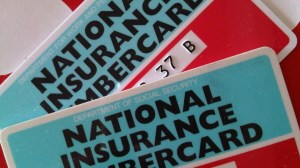
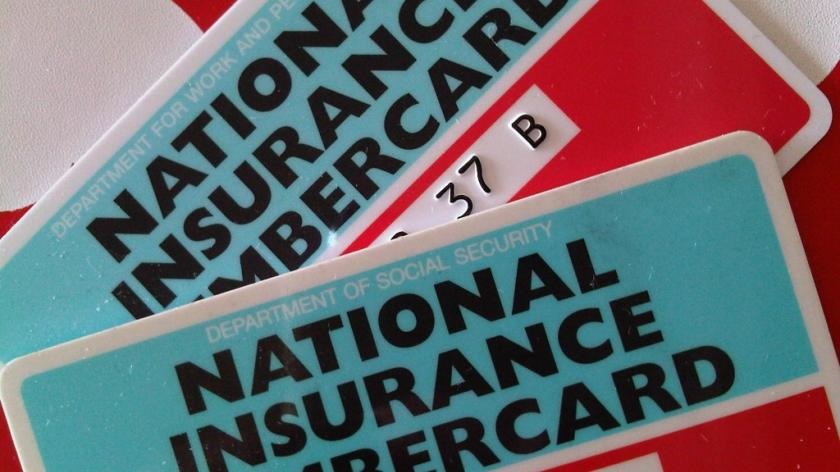
National Insurance Contributions Changes
 For Employees
From 6 July 2022, as an employee you will be able to earn more before you start paying National Insurance. This means you may pay less tax, after accounting for the recent Health and Social Care Levy.
You can use this tool to get an estimate if you’re employed and paid the same amount monthly, by your employer through the PAYE system.
For Employers
The Primary threshold from 6 July 2022 to 5 April 2023 will be £242 per week and £1,048 per month, equivalent to £12,570 per year (increased from £9,880 per year).
PAYE tax and Class 1 National Insurance contributions
You normally operate PAYE as part of your payroll so HMRC can collect Income Tax and National Insurance from your employees.
Your payroll software will work out how much tax and National Insurance to deduct from your employees’ pay.
Tax thresholds, rates and codes
The amount of Income Tax you deduct from your employees depends on their tax code and how much of their taxable income is above their Personal Allowance.
England and Northern Ireland
PAYE tax rates and thresholds 2022 to 2023 Employee personal allowance £242 per week
£1,048 per month
£12,570 per year





-
Subscribe
Subscribed
Already have a WordPress.com account? Log in now.
 Derby Community Accountancy Service