Tag: budgeting

Don’t forget to prepare your budget!

Budgets are vital to run your charity effectively!!

So what is a budget? 

A budget is: 

  • a financial evaluation of an organisation’s planned services for the coming year 
  • a forecast of income and expenditure which can be used to monitor financial performance in the year ahead 
  • a financial plan which may be required by funders 

Why budget? 

A budget is prepared to: 

  • ensure that the proposed plan of services to members can be achieved within the finances available 
  • ensure that best use is made of finances
  • establish a method of checking and monitoring financial performance
  • report planned and actual performance to the Management Committee

How is the budget prepared? 

The following model makes these assumptions: 

  • The charity has no plans to alter its activities and apply for new grants. 
  • Any grant funding received is repeat funding and there is complete certainty it will be received. 

You should prepare the budget in the following four stages, always making sure that it is approved by a full Management Committee at least one month before the commencement of the financial year. 

1.     Expenses 

The starting point for a budget is the Expense Headings which will usually be fairly obvious: 

Example: 

Wages Who is employed and at what rate? 
Rent, rates How much and when do we pay? 
Heat and light How much will it cost to heat the premises? 
Maintenance Are we responsible for maintenance of the building and are any major repairs necessary? 
Telephone, etc. How much and when do we pay? 
Expenses What is the likely cost of Management Committee      members and employees’ expenses? 
Sundries Make a reasonable judgement about these small amounts, e.g. Petty cash items. 

You now have a list and a forecast value of expenses which you should compare with the previous year’s Actuals to ensure that they are reasonable, and that you have not left anything out. 

2.     Income 

You must now construct the Income side of the budget. 
 
This will comprise Guaranteed Income, i.e. income which has already been agreed by a funder or funders, and non-guaranteed income, i.e. income which you plan to raise. 
 
Again, when you have compiled these figures, you should compare them with the previous year’s Actuals to test if they are reasonable. 
 

3.     Comparing Income and Expenditure 

Total income and expenditure should now be compared with each other to establish if there is a forecast surplus or deficit of income over expenditure. 
 
It is sound Financial Planning to budget for a surplus of about 5%, i.e. to ensure that Income exceeds Expenditure by about 5%.  This should ensure that any unforeseen expenditure can be met. 

If there is an adequate surplus then you may proceed to phase the figures, i.e. to analyse the income and expenditure in the month they arise. 

If, however, there is a Deficit it will be necessary either to: 

  • seek additional funding 
  • organise more fund raising 
  • reduce cost by deferring proposed expenditure 

However, BEWARE!  It is not good practice to defer necessary expenditure, e.g. Maintenance – ‘buildings don’t get better’.

4.     Phasing the budget 

Phasing is a most important aspect of constructing a budget.  It involves analysing both income and expenditure monthly.  This is important because, whilst the total budget for the year may show a surplus, it is quite possible to have sizeable deficits in individual months. 

If there is a phasing problem, i.e. if there is deficit in particular months, it may be possible to: 

  • arrange for funders to pay half-yearly in advance instead of quarterly in advance    or 
  • defer expenditure to later in the year 

In any event, this problem must be resolved before the budget is submitted for approval. 

In due course, when a budget has been constructed showing an adequate surplus and a satisfactory phasing, you should submit the budget to the Management Committee for final approval. 
Know Your Charity’s Financial Position

Set a budget and follow it

Your charity should have a budget.  Check that it is being used.  It helps make sure you have realistic plans based on how much money your charity:

  • currently has
  • plans to raise
  • plans to spend each year

By checking how much your charity receives and spends against the budget, you can identify problems in good time and agree what to do about them.  It’s particularly important to do this where you see big differences between the budget plans and what is actually being spent.

Mr Claw Cover


Our publication Mr Claw in the World of Charity Accounting explains charity budgeting and planning in more detail.  We still have a few copies available, so contact us here if you would like a copy.

Get the funds you need

Your charity may get the funds it needs in different ways.

This can include:

Make sure you know what the rules are for getting funds in these ways and that your charity complies with them.

If your charity does not spend all its income

Check that your charity has a reserves policy.  This explains whether your charity is aiming to keep a reserve of unspent income, what it will be used for and why this is reasonable.  Check that your charity sticks to the policy or can explain why if it does not.

Make sure that your charity’s annual report explains the policy and says how much money (if any) it has kept in reserve, what it is for and when the charity will use it.

If you want more information on Reserves, see the Charity Commission’s guidance here

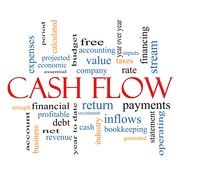
Cashflow Forecasting

CashflowA cash flow forecast is an estimate of the amount of money you expect to flow in and out of your charity and includes all your projected income and expenses.  A forecast usually covers the next 12 months, however it can also cover a short-term period such as a week or month.

The most important reason for a cash flow forecast is to make sure that the charity can afford to pay suppliers and employees. Suppliers who don’t get paid will soon stop supplying the charity – it is even worse if employees are not paid on time.

A cash flow forecast can help you:

plan out how much income you expect to have this year

plan how much you expect to spend in costs

understand when cash will come into your bank account and leave it

Armed with this knowledge, you will be well placed to make important decisions about your charity. Here are some questions that a cash flow forecast can help you answer:

Could you offer a new service?

Could you start providing services in a different location?

Can you afford to employ new members of staff?

Should you outsource some of your day-to-day tasks?

If you need more space for your charity, can you afford to rent an office rather than working at home?

Are you at risk of running out of cash? Should you look at borrowing money?

If you require further help with this subject, please contact us here

Training Course – Budgeting and Cashflow Forecasting

Date: Wednesday 30th November 2016

Time: 09:30 – 12:30

Venue: Bosnia Herzegovina Centre  DE1 1LN

Book your place here

Budgeting and Cashflow Forecasting is a must for every organisation, large or small.  This session will show you how to prepare a budget or cashflow forecast, and, more importantly, how it can be used to control the funds.  This is an area of increasing importance, which all groups need to understand.

Autumn Training Courses

https://i0.wp.com/www.e-learningcentre.co.uk/wp-content/uploads/2016/03/finance-for-non-financial-staff.jpgHaving problems managing your finances or querying about employment law?

Look no further – we have more training courses coming up in November.  More details to follow, but you can book now by emailing us here.

Wednesday 16th November – Financial Management for Voluntary Groups

Wednesday 23rd November – Employment Law

Wednesday 30th November – Budgeting and Cashflow Forecasting

Training Course in Budgeting and Cash Flow

‘How do you know you have got there if you don’t know where you are going?’

Budgeting and cash flow is a must for every organisation – large or small.  This session will show you how to prepare a budget or cash flow forecast and more importantly how it can be used to control the funds.  This is an area of increasing importance of which all groups need an understanding.                                      Leader: Margaret Mowles

Date: Wednesday 4th November 2015 – Book your place here

Time: 09:45 – 12:30 (tea and coffee available from 09:30am)

Venue: Derby Bosnia-Herzegovina Centre, 99 Curzon St, Derby DE1 1LN

Parking available at the Pay and Display car park in Abbey Street – entrance close to junction with Mercian Way A601.  Charge £3.80 for up to 4 hours.

Budgeting and Cashflow Forecasting

‘How do you know you have got there if you don’t know where you are going?”

Budgeting and cashflow forecasting is a must for every organisation – large or small.  This session will show you how to prepare a budget or cashflow forecast, and more importantly, how it can be used to control the funds.  This is an area of increasing importance of which all groups need an understanding.

Wednesday 5th November 2014

09:45 – 12:30

at Derby Bosnian Centre

There is just one place still available on this course, so if you would like to take it up, you can contact us here